The idea
Why look beyond two points?
For decades, two-point statistics such as the power spectrum have been the cornerstone of large-scale structure studies. The power spectrum measures how strongly matter clusters on each length scale. For a Gaussian field, that is the whole story.
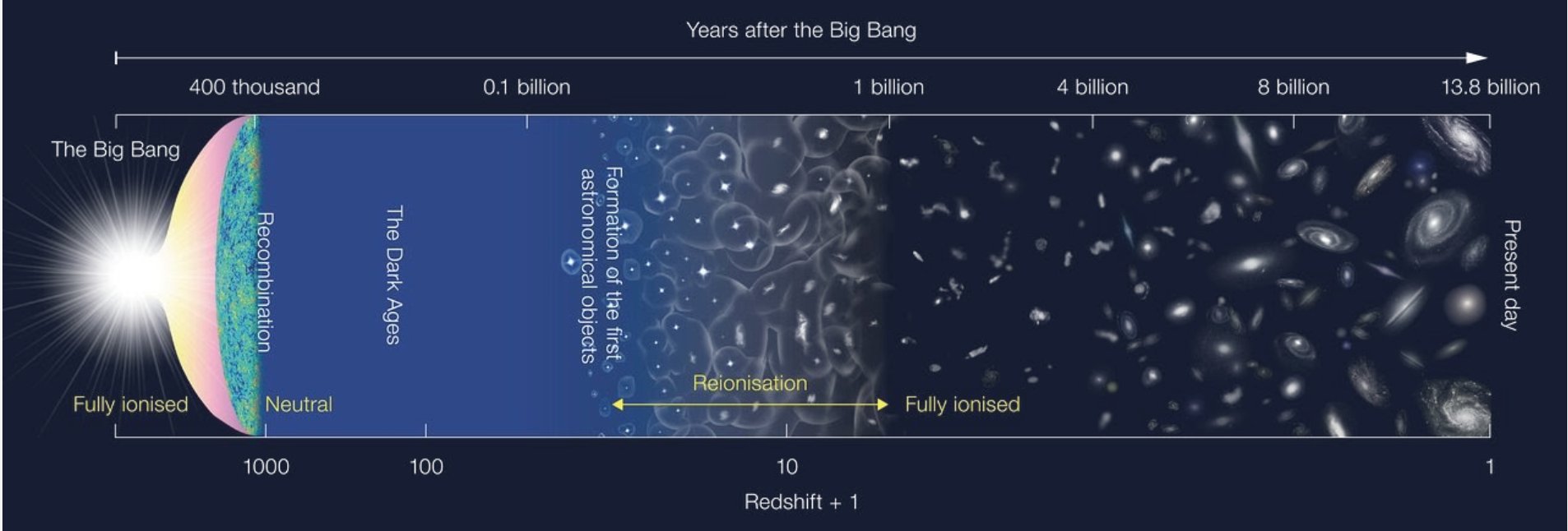
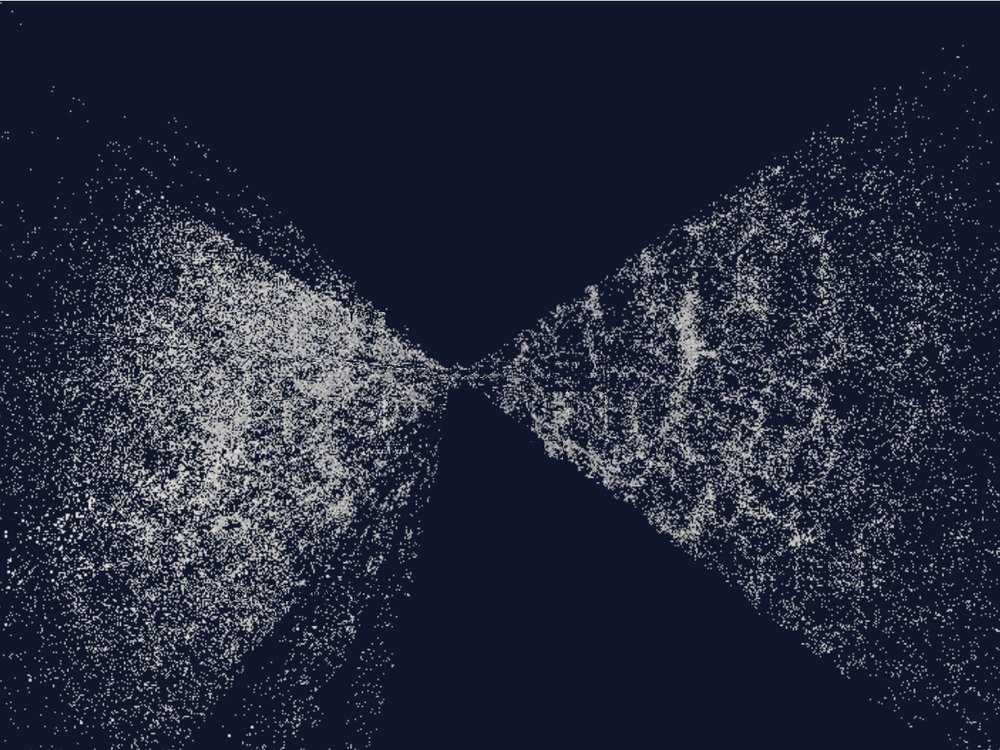
The Universe we observe is not Gaussian. Gravity draws matter into filaments, sheets and clusters, and this non-linear growth leaves imprints that the power spectrum cannot see. Higher-order statistics capture that missing information, so we can learn more from the same galaxy surveys and 21-cm observations.
The bispectrum is the next statistic after the power spectrum, and the first that responds to non-Gaussian features. It matters at both ends of cosmic history. At late times, it traces the non-linearity built up by gravitational instability. In the very early Universe, it constrains primordial non-Gaussianity, which opens a window onto the physics of inflation.